
Blog
Kratom Powder Origins: Inside the Hulu Kapuas Region of Borneo

Indonesia and Its Islands
Let’s take a visit to the lush landscape of Indonesia. It is the 14th largest country by total area (~735,000 square miles) and contains more than 17,000 islands. Borneo is the largest island that includes Indonesian territory – but it’s important to note this is a shared island. Yes, it’s a lot to take in with the different sections, provinces, and regencies, but we’ll map it out one by one. Borneo is one huge island shared by three countries: Indonesia, Malaysia, and Brunei (Brunei is an independent country itself).
🏝️ Borneo is the third largest island in the world (after Greenland and New Guinea)
🧭 Kalimantan is the name for Indonesia’s part of Borneo. West Kalimantan is one of Indonesia’s provinces, and the Kapus Hulu is a regency within West Kalimantan (specifically the upper drainage area of the Kapuas River).
🍃 Borneo is also the largest island in Indonesia associated with Kratom production – and the Hulu Kapuas region is where the magic happens.
* Please note – Kapuas Hulu Kratom and Hulu Kapuas Kratom are mentioned interchangeably as we’ve come across numerous websites and platforms that have them switched. Kapuas Hulu is the correct official name for the regency, though people sometimes use ‘Hulu Kapuas’ because ‘Hulu’ means upper stream / headwaters in Indonesian.
The enormous Hulu Kapuas region is known for its forests and biodiversity with communities (including roads, towns, farms, and cultivated lands) built close to the water. Let’s zoom into this dense tropical region and get the scoop on the Mitragyna Speciosa trees that thrive here and the Kratom farmers
Kapuas Hulu Kratom
Kratom trees commonly grow in warm, wet environments including riverbanks and cultivated plots. The plant’s physical characteristics resemble a broad-leaved tropical tree. They grow quite tall (40-80 feet tall) with straight trunks.
Farms aren’t exactly organized orchard-style. Instead, picture small family-owned plots, trees planted in gardens or mixed agricultural lands. Larger groups of trees are grown closer to rivers and existing trees are maintained and harvested by farmers alongside deliberately planted ones.
Kratom farming in Indonesia doesn’t exactly resemble the organized orchard style operations of many commercial tree farms in the States.
A typical scene…
🧑🌾 Farmers reaching upward or using tools to collect leafy branches from the taller trees
🍃 Bundles or sacks of freshly harvested leaves
💦 Muddy paths and humid
🌊 Rivers and wetlands nearby
🪨 Uneven land
🍌 Other vegetation (such as banana plants, coconut palms, bamboo, low shrubs, and rubber trees) mixed in around the mighty Mitragyna Speciosa trees.
How Kratom Leaves are Harvested
As mentioned above, a common scene would be farmers reaching upward to pry off leaves or using tools to collect leafy branches. They seek out mature full-sized Kratom, boasting a glossy sheen and deep green hue. The leaves are still commonly harvested by hand in 2026 within Southeast Asia. Rather than chopping down the entire tree, farmers will remove the leaves or leafy branches and allow the tree to continue growing.
Ladders are used for much higher leaf collecting. Borneo Kratom farmers may remove selected leaves rather than stripping the entire canopy.
Fun Fact: Kratom is a perennial tree, so harvesting is not a one-time event like harvesting an annual crop. Southeast Asian farmers may hand-harvest leaves approximately every 50 days or simply several times a year. It all depends on the tree’s productivity and seasonal conditions.
There is no fixed schedule. It’s a general practice followed by every farmer in Kapuas Hulu.
After removing said leaves from the trees, they’re then placed into sacks, baskets, tarps, or bundles then transported to a nearby home, a drying space, or a processing facility. The leaves contain considerable moisture and must be protected from dirty surfaces, animals, standing water, and other possible contaminants. The communities built closer to rivers might have to make some of their journey on narrow boats before the leaves reach a larger processing area or transportation hub.
Kratom Leaf Processing
Leaves are inspected for damaged or discolored leaves, soil, insects, excess stems, or unregulated vegetation. If water is used the leaves must be dried carefully to prevent excess moisture and microbial growth.
Some freshly harvested leaves are left to wilt or wither before full drying. They’ll lose moisture, of course, and may undergo chemical changes.
The accepted leaves then move onto the drying process.
There are a handful of different drying methods that they can undergo.
Drying in sunlight
Drying in shaded, ventilated area
Indoor rack drying
Controlled hot-air or mechanical drying
Or a combination of these methods
This is a very important quality control stage as leaves that retain too much moisture can support mold or microbial growth, while excessive heat can alter plant compounds.Both drying temperature and airflow affect drying speed, final color, and mitragynine retention.
✋ Hold up, you may be asking if the harvest determines red, green, or white vein types. Well, the retail color categories should not be explained solely as farmers choosing leaves with these matching colors. Finished Kratom Powder categories also reflect leaf maturity, drying, fermentation, blending and the naming system used by a particular producer.
How Kratom Powder is Made
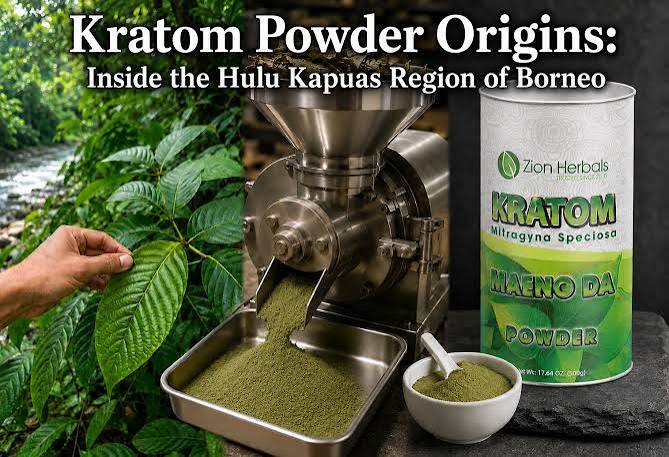
Once the leaves have fully dried, their brittle physique can be broken into smaller pieces before being passed through a mill or grinder. This transforms the dried botanical material into powder.
It can be milled more than once to achieve a finer, even texture.
The powder can be passed through screens or sieves to remove more unwanted materials – like remaining pieces of stem, coarse leaf fragments, and fibrous material (twig, tough secondary leaf veins…).
The next step is blending and batch preparation.
Powders from multiple harvest lots may be combined to create a larger, more uniform production batch. This step can help reduce natural variation, but it also makes batch identification and traceability important.
Red Vein, Green Vein, White Vein, and Maeng Da are commercial classifications rather than universally standardized botanical varieties. Their final color and characteristics may reflect a combination of leaf genetics, growing conditions, drying method, withering, and blending decisions.
Laboratory Testing
Lab-tested Kratom Powder ensures another level of safety. A responsible finished-product process should include appropriate testing for:
– Identity
– Mitragynine and other declared alkaloid measurements
– Heavy metals
– Microbial contaminants (such as Salmonella and certain forms of E. coli)
Adulteration
– Cross-contamination
The raw leaf Kratom from Borneo has been transformed. Wah-lah! Fresh Kratom Leaf Powder! ✨
The packaging may then carry a batch or lot number connecting it to production and testing records.
✅ Zion Herbals implements cGMP Manufacturing Practices, ensuring every batch meets strict safety and purity standards.
Kratom Leaf Powder Selection
(available in 250mg and 500mg canisters)
🟢 Green Vein Powder
🟡 Maeng Da Powder
🔴 Red Vein Powder
⚪️ White Vein Powder
Disclaimer
⭐️ Kratom is not FDA-approved. Effects may vary.