Blog
Blue Lotus: History and Benfits

Blue Lotus History
Blue Lotus (Nymphaea caerulea) is native to Egypt and parts of East Africa, growing in slow-moving waters like the Nile. The beautiful water lily caught the attention of ancient Egyptians, as it had a bit of a familiar ‘sleep schedule.’ It would open with the sun ☀️ and close at night.
⭐ Blue lotus symbolism~ they believed this vibrant flower symbolized rebirth, life, and the daily journey of bright sun.
Beautiful, yes, but it wasn’t used for typical decor. This flower had a big cultural role in ancient Egypt. Pharaohs, priests, and nobles often had various paintings, sculptures, and jewelry of it.
In fact, Tutankhamun (King Tut), one of the most well known pharaohs in the history books, donned jewelry 👑 and artwork of the blue lotus in his tomb.
Ramses II is often shown in temple reliefs holding a blue lotus flower during religious ceremonies. The lotus represented his divine authority and his role as a mediator between the gods and the people.
The Egyptian blue lotus wasn’t used in a specific ritual. On the contrary, this versatile plant shown brightly in many rituals: temple offerings, sunrise rituals, funerals and afterlife rituals, and banquets. Sometimes the flowers would even be placed with the dead and buried with them, striving for renewal in the afterlife.
Blue Lotus Mythology
Referring again to creation, rebirth, and the sun, Egyptians saw this as a natural representation of cosmic cycles.
Creation Myth~
How did the universe come to be? Egyptians tell of the creation story beginning with a vast dark ocean called Nun, chaotic and endless. From here, an immense blue lotus flower rose to the surface, and as the petals bloomed open, something…or someone glorious…rose from it.
In some tales, it is the sun ☀️ itself.
In others, it is an infant: the sun god Ra, said to be the creator of the world and representation of creation, life, and kingship. Truly, the leader of the gods.
Fun fact: He was often depicted as a man with the head of a falcon, boasting a solar disk headpiece surrounded by a cobra. 🐍 Nice.
The Egyptians believed Ra would sail across the sky in a solar boat daily to raise the ball of fire in the east, shine full power at noon, and set it in the west.
Harvest and Consumption Methods~ How to Use Blue Lotus
Blue lotus was a rather easy flower to harvest. During the daylight hours, villagers either took to the waters in small boats, or carefully waded in the shallower regions to find the flowers, still fully opened and fragrant. The flowers were often cut by hand with knives 🔪 by slicing off the stem near the base or simply pulled.
The stems were bundled and transported off to temples, homes in the village, markets, or banquets.
So, they have the key ingredient. How exactly did they take it all in?
🍷 Wine~ Most Popular
The flowers were soaked in wine, and the mixture was left on its own to steep. Sometimes for hours…sometimes for days. This tended to be the most popular method since the alcohol helped extract compounds (like the key dopamine-interactor: aporphine) more effectively. This wine mixture was associated with rituals, relaxation, and possibly blue lotus mild euphoria.
🍵 Tea
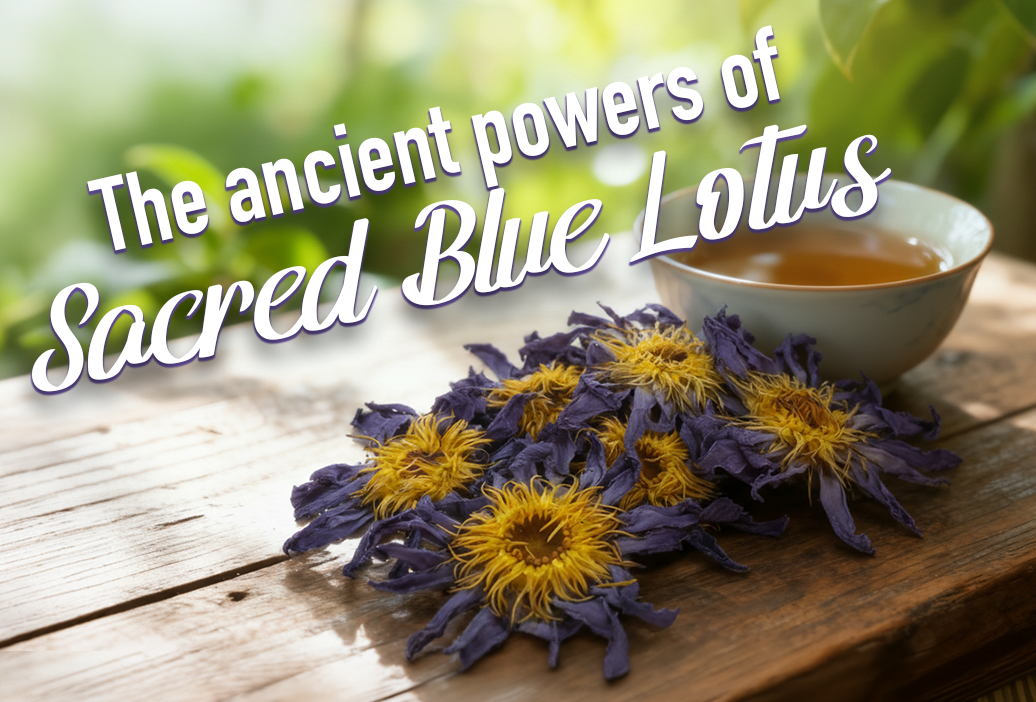
Pedals were placed in hot (not boiling) water usually for about several minutes, but sometimes a little longer, depending on strength. This infusion produced a mild, aromatic drink: blue lotus tea.
👃 Inhaling the Fragrance
Drinking might’ve been a popular choice, but inhaling the flower’s scent was a very common practice, as well. In tomb paintings, villagers are often shown holding the flower up to their nose. The scent is both sweet and sedative.
Villagers would also wear the flowers in various forms like garlands, headpieces, and jewelry decorations. Against the skin, the flower would release fragrance throughout and day. Like many essential oils worn these days, this could create a mild aromatherapeutic effect.
☁️ Oils & Perfumes
Look no further than another spritz of fragrance. Egyptians were highly advanced when it came to perfume crafting. The blue lotus flower was steeped in oils or fats to create perfumes and fragrant ointments that could easily be applied directly to the skin, hair, or wigs.
It’s important to note that the chemistry of this flower is not that strong, so while the aporphine and nuciferne compounds are present, they occur in relatively low concentrations, thus, the effects are quite subtle. They have gentle effects on dopamine and serotonin and are not powerful hallucinogens or sedatives.
Reported Benefits
This, of course, differs by individual. Both traditional use and modern reports suggest the flower pedals bring about a mild calming effect. Blue lotus calming effects are sometimes compared to a very light sedative.
Individuals have also reported feeling a bit of a ‘perk up’ and ‘mood boost’ sensation. The linked compounds are subtle but do affect dopamine (very mildly).
Individuals have used it before bed 😴, claiming it brings about an easier sleep onset.
🚨 Can cause drowsiness – don’t mix with other sedatives.
🚨 Be cautious when combining with alcohol as the effects can stack.
⭐️ The statements made regarding this product have not been evaluated by the Food & Drug Administration. The efficacy of Blue Lotus has not been confirmed by FDA-approved research. We assume no responsibility for the improper use of this product. This products is not intended to diagnose, treat, cure or prevent any disease.
Modern Day Blue Lotus
Today’s blue lotus is used mostly in wellness, herbal and recreational contexts rather than formal rituals or events tied to spirituality.
And how is it enjoyed these days?
Well, the tried and true method comes back to tea. Dried petals are steeped in hot water for 5-10 minutes, and wah lah, you have a steaming cup of light, floral herbal tea. Great for winding down before bed or to savor a hot calming beverage when the daily tasks get a bit hectic.
Though if you’re looking for a no prep, timesaving consumption method- we have your back. Nine Mile Botanicals Blue Lotus bring the power of the Egyptian flower in easy to swallow capsules made with blue lotus extract. Simply take with water! 💧
🔵 Nymphaea Caerulea Extract: 150mg per capsule
🔵 Hemp Protein: 150mg per capsule
Capsules can be a little harder to find than the actual dried petals (these are abundant online), but we understand modern lifestyles call for easy, peasy…and fast. Plus, dosing is consistent and, we can’t stress this enough, there’s no strong floral taste. 🤷 Hey! Floral isn’t for everyone!
So are its effects as strong as ancient times?
Not quite. Ancient preparation of the blue lotus may have been stronger, especially since Egyptians were infusing their flowers in wine. So the effects might have been amplified due to that alcohol + plant combination.
No strong evidence suggests the plant has changed over time or lost potency, but it’s important to note the different growing conditions (soil, climate) can affect strength, and modern commercial plants may not be identical to the ancient cultivated ones. There may be a variation…but not a huge evolutionary drop-off.
If you hear folks claiming the blue lotus is ‘psychedelic’ or ‘drug-like’, take it with a grain of salt. This flower is much more similar to chamomile, a mild glass of wine, or light aromatherapy.
Try Blue Lotus~ embrace the subtle calm and lift that mood a tick.
🪷 SHOP BLUE LOTUS
💊 SHOP ALL NINE MILE BOTANICALS